
'Trump had done a deal with the current regime minus Maduro. The current regime is giving Trump entry into Venezuelan oil. They are obeying him and doing whatever he says.' 'They are happy because they have saved their heads by sacrificing only two, Maduro and his wife. Thousands of Venezuelan military leaders would have been jailed or killed in American action had Maduro stayed in power.'

The decision to hike US H-1B visa application fee to $100,000, trade talks and the GST rate cut will be the key drivers for stock market movement this week, analysts said.

Stock markets will be driven by RBI's interest rate decision, tariff-related developments, global trends and trading activity of foreign investors in this holiday-shortened week, analysts said.

Among Sensex firms, Maruti zoomed the most by 8.94 per cent. Bajaj Finance rallied over 5 per cent, UltraTech Cement by 3.71 per cent, and Bajaj Finserv by 3.7 per cent. Mahindra & Mahindra, Hindustan Unilever and Trent were also among the gainers. However, ITC was the biggest loser, dropping by 1.26 per cent. Eternal, Tech Mahindra and Larsen & Toubro also declined.
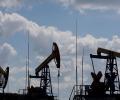
India's purchase of Russian oil has risen to 2 million barrels per day in August, as refiners continue to prioritise economic considerations in their sourcing decisions. As much as 38 per cent out of an estimated 5.2 million barrels per day of crude oil imported in the first half of August came from Russia, according to global real-time data and analytics provider Kpler.

Donald Trump's tariffs, meant as political punishment, have avoided the predicted chaos, lifting US growth, weakening rivals, and letting him claim victory in a resilient global economy, observes T T Ram Mohan.

Trading activity of foreign investors and crude oil prices would also remain in the limelight during the week, experts noted. "This week brings a series of important economic data releases from India and the United States, which are likely to influence market sentiment and central bank outlooks.

India's exports contracted 11.8 per cent to $34.38 billion in October, showed government data released on Monday. Imports jumped 16.63 per cent to $76.06 billion.
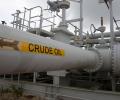
The government has reduced the windfall profit tax levied on domestically-produced crude oil as well as on the export of diesel and ATF, in line with softening international oil prices, according to an official order. The levy on crude oil produced by companies such as Oil and Natural Gas Corporation (ONGC) has been cut to Rs 1,900 per tonne from Rs 2,100 per tonne, the order dated January 16, said. Crude oil pumped out of the ground and from below the seabed is refined and converted into fuel like petrol, diesel and aviation turbine fuel (ATF).
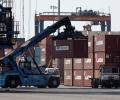
The commerce ministry on Friday held consultations with key stakeholders, including shipping lines, exporters, container firms, and other departments, to assess the impact of the Iran-Israel conflict on India's overseas trade, an official said. The meeting was chaired by Commerce Secretary Sunil Barthwal.

Global trends, macroeconomic announcements and US tariff developments are expected to drive stock markets in a holiday-shortened week, analysts said. Market participants will also closely track foreign investor activity, geopolitical tensions, and their impact on the US dollar and crude oil prices, they added.

The oil industry experienced three upheavals between 1973 and 1991, which seem to be etched in the memory of the industry's decision makers. Naturally, at the sign of a new crisis, the decision makers like to dip into those tumultuous decades to find ways to deal with the new shock, in addition, of course, to expert reports and forecasts. So, the industry bigwigs turned the pages of history to get a peek into the future of oil price movements after Russia invaded Ukraine in 2022, Israel attacked Gaza in 2023, Iran-linked Houthi rebels pounded tankers crossing the Red Sea in support of Palestine the same year, and Iran rained missiles on Israel in 2024.
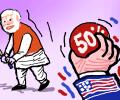
'Things may get much worse before they get better,' predicts Ajay Chhibber.

From the Sensex pack, Bajaj Finserv, Mahindra & Mahindra, Axis Bank, Bajaj Finance, Adani Ports, ICICI Bank, Zomato and UltraTech Cement were among the biggest gainers. However, ITC, Nestle, State Bank of India, Reliance Industries, Asian Paints and Tata Consultancy Services were among the laggards.

From the Sensex constituents, Tata Steel, Bajaj Finance, Bharti Airtel, Adani Ports, Eternal, Bajaj Finserv, NTPC, HDFC Bank, Reliance Industries and Axis Bank were among the major gainers. In contrast, Trent, State Bank of India, Tech Mahindra, Maruti and Mahindra & Mahindra were among the laggards.

All the BSE sectoral indices closed in the green. BSE Realty, Auto, Capital Goods and Industrials were lead gainers, jumping up to 5 per cent. IndusInd Bank was the lead gainer among Sensex shares, surging by 6.84 per cent. Tata Motors rallied 4.50 per cent. Larsen & Toubro, Axis Bank, Adani Ports, HDFC Bank, ICICI Bank and HCL Tech were also among the gainers. ITC and Hindustan Unilever were the only laggards.
Among Sensex firms, Tata Steel, HCL Tech, UltraTech Cement, Bharat Electronics, Sun Pharma and Tata Consultancy Services were the major gainers. However, Axis Bank, Titan, Maruti and Tata Motors were among the laggards.

'In the long run, India's strong growth story and reforms to make assets globally attractive will determine the rupee's resilience.'

India's macroeconomic health is in a "relative goldilocks situation", and although the risk of higher landed oil prices, due to insurance cost surges and closure of choke points due to the brief Israel-Iran war, has receded, it is "too soon to sound the 'all clear' for the rest of the year", the Finance Ministry said on Friday.

From the 30-share blue-chip pack, Mahindra & Mahindra, Zomato, Tata Motors, IndusInd Bank, Reliance Industries, Larsen & Toubro, UltraTech Cement, HDFC Bank, Adani Ports and Bajaj Finserv were among the major laggards. On the other hand, Hindustan Unilever, Tech Mahindra, Nestle, Bharti Airtel and ICICI Bank were among the gainers.
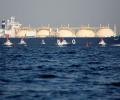
Oil and LNG prices are likely to shoot up if Iran is to block Strait of Hormuz, through which countries like India import crude oil from Saudi Arabia, Iraq and UAE, leading to a spike in inflation, analysts said on the Iran-Israel conflict. The Iran and Israel conflict has escalated over the last few days. Iran first launched drone and rocket attacks on Israel, which retaliated by firing a missile. Crude oil prices have hovered around USD 90 per barrel since the conflict.

India's merchandise trade deficit widened to a record $41.68 billion in October, as gold imports trebled and outbound shipments registered their sharpest contraction in 14 months, according to data released by the commerce department.

The BSE Sensex has been one of the top-performing areas of investment in the past 40 years, consistently delivering double-digit returns in rupee terms, beating assets such as global equities, precious metals, and fixed income.
'The E20 usage accrues the huge benefit to the nation, to the society, to the farmer, to the environment, to the exchequer and all of us'

From the Sensex firms, Tata Motors jumped the most by 5.54 per cent, followed by Kotak Mahindra Bank, Trent, Sun Pharma, Axis Bank, and ICICI Bank. However, Bajaj Finance, State Bank of India, UltraTech Cement and Tata Steel were among the laggards.
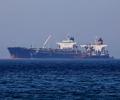
The US has sanctioned an Indian national based in the United Arab Emirates and two India-based entities for operating as part of Iran's shadow fleet and involved in shipping Iranian oil. The US Department of the Treasury said Jugwinder Singh Brar, who owns multiple shipping companies, operates as part of Iran's shadow fleet, which the US said is used to evade sanctions and transport Iranian oil. Brar also owns or controls India-based shipping company Global Tankers Private Limited and petrochemical sales company B and P Solutions Private Limited. The sanctions come as part of a US campaign of maximum pressure on Iran and target the country's petroleum and petrochemical sectors.
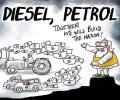
The government on Wednesday scrapped a week-old tax on the export of petrol and cut windfall taxes on overseas shipment of diesel and ATF as well as the one imposed on domestically produced crude oil after global oil prices fell. While the Rs 6 a litre export duty on petrol was scrapped, the tax on the export of diesel and jet fuel (ATF) was cut by Rs 2 per litre each to Rs 11 and Rs 4 respectively, government notifications showed. The tax on domestically produced crude was also cut to Rs 17,000 per tonne from Rs 23,250, a move that will benefit producers like ONGC and Vedanta Ltd.

From the Sensex pack, HCL Tech, Bajaj Finserv, HDFC Bank, Bajaj Finance, Infosys, Titan, ICICI Bank, Sun Pharma, Reliance Industries, Larsen & Toubro, Tech Mahindra and NTPC were among the biggest laggards. Among gainers, IndusInd Bank jumped over 5 per cent while Zomato ended marginally higher.

Investors lost Rs 24.69 lakh crore in market valuation in the last four days of severe drubbing in the equity market. Spike in global crude prices, unabated foreign fund outflows, a strong US jobs data diminishing early rate cut expectations, and the rupee logging its steepest single-day fall in nearly two years dampened investors' sentiment.
India's net oil import bill could widen to $101-104 billion in current fiscal from $96.1 billion in 2023-24 and any escalation in the Iran-Israel conflict could impart an upward pressure on the value of imports, ICRA said on Tuesday. The domestic rating agency said based on its analysis, lower value of Russian oil imports is estimated to have led to savings of $7.9 billion in 11 months (April-February) of 2023-24, up from $5.1 billion in 2022-23.
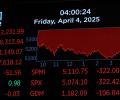
'If the US stagnates and falls into a recession, the dollar will weaken, oil prices will also dip. This augurs well for India.'

Assessing where their funds are flowing gives traders a hidden edge in predicting the market direction and momentum.
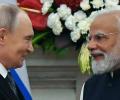
United States representative Sydney Kamlager-Dove while talking about the famous car selfie of Prime Minister Narendra Modi with Russian President Vladimir Putin said that it spoke a thousand words.
'The primary market's rhythm mirrors investor confidence. While sentiment may appear cautious, it reflects maturity, not weakness.'
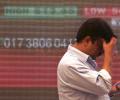
Investors' wealth eroded by Rs 5.98 lakh crore on Thursday, tracking weak trends in equities where the BSE Sensex tumbled 1 per cent. Benchmark indices Sensex and Nifty declined 1 per cent in tandem with weak global market trends amid growing tensions in the Middle East.
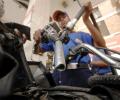
Petroleum and Natural Gas Minister Dharmendra Pradhan speaks to Sheela Bhatt/Rediff.com.

Equity markets this week would keenly track the upcoming GST Council meeting, macroeconomic data announcements and trading activity of foreign investors for further movement, analysts said. Moreover, developments related to tariff negotiations, global market trends and auto sales data would also drive investors' sentiment.

Essar Oil has decided to cut petrol and diesel prices in the range 50 paise to Rs 2.50 per litre effective from July 16.
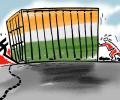
Merchandise exports to the US jumped 23.5 per cent year-on-year (Y-o-Y) to $8.3 billion in June, even as India's overall outbound shipments witnessed contraction during the month, according to the data released by the commerce department on Tuesday. The increase in outbound shipments to the US was largely driven by the rush among exporters to utilise America's pause on its plans to impose country-specific reciprocal tariffs.

'The frenzy for gold is primarily due to the uncertainty surrounding the tariff war.'
